
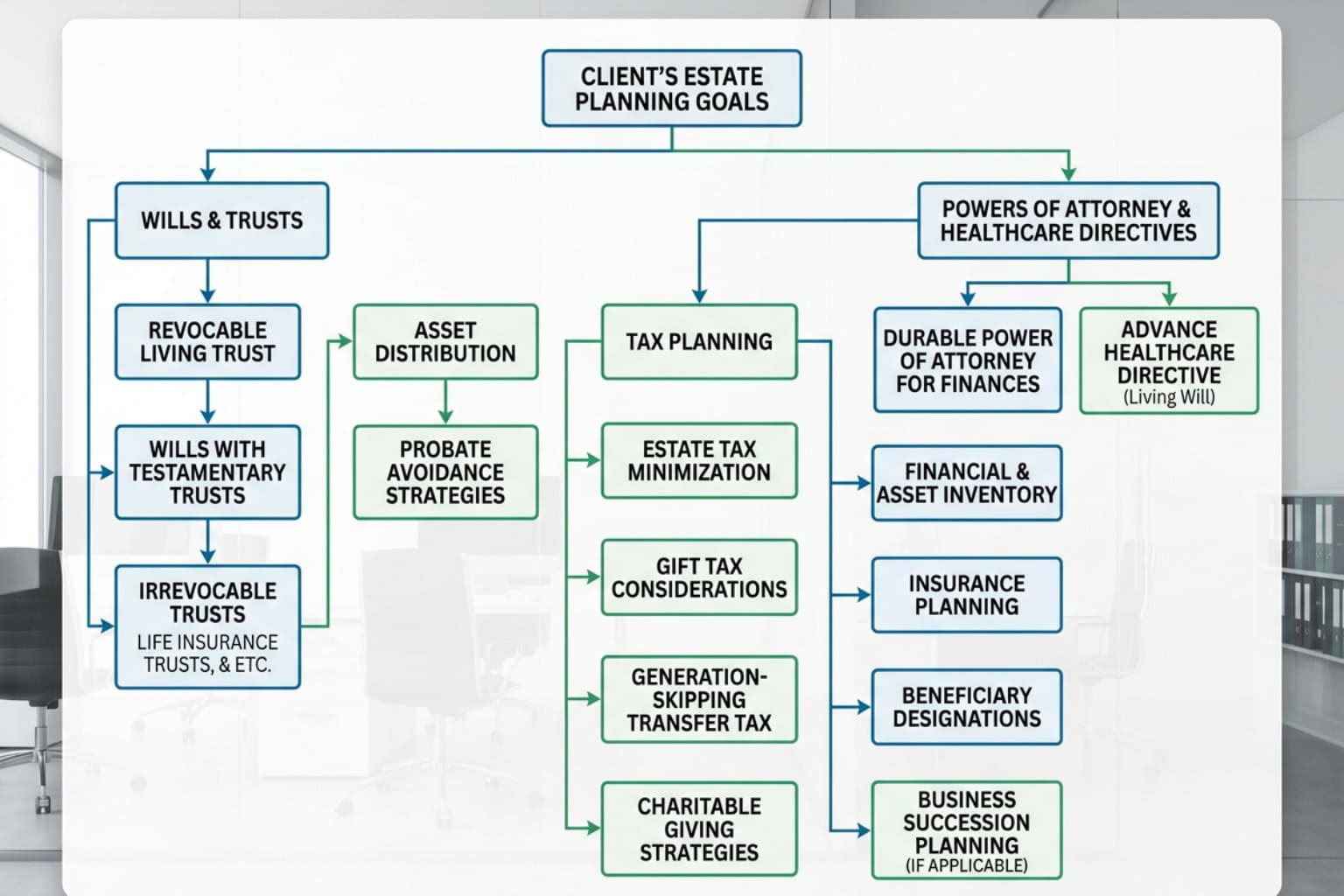
Core Strategies of Estate Planning for Enrolled Agents
The diagram above illustrates planning topics, not a required sequence of trusts or a recommended structure for every client. Enrolled agents often identify tax questions that also involve a client’s family, business, or estate plan. An EA credential alone does not authorize legal drafting, but understanding the components of Estate Planning helps you identify issues for review, model tax consequences, and coordinate with the client’s attorney, CPA, and financial advisor.
What Are the Major Elements in Estate Planning? explains the basic documents and decisions to discuss with counsel. An EA can help identify where those arrangements affect tax reporting and planning:
- Durable Powers of Attorney (Financial and Medical): A financial power of attorney can authorize another person to manage specified financial matters during incapacity; a medical power of attorney addresses healthcare decisions. Ask whether the documents are current and refer questions about their scope to counsel. Authority to represent a taxpayer before the IRS or sign a federal return has separate requirements; do not assume a state-law power of attorney satisfies them.
- Living Wills and Healthcare Directives: These documents record healthcare preferences and form part of an incapacity plan. An EA can ask whether the client has reviewed them with an attorney, without evaluating their legal sufficiency or advising on medical decisions.
- Conservatorships and Guardianships: A court-appointed conservator or guardian may be needed when a person cannot manage financial or personal decisions and other arrangements are insufficient. The need depends on the circumstances, not simply on whether a power of attorney exists. Coordinate fiduciary authority and any resulting tax-reporting duties with counsel.
- Probate Avoidance Techniques: Probate administers assets that do not pass through another effective transfer arrangement. EAs can identify tax consequences of ownership and beneficiary choices, while an attorney addresses legal implementation. Non-probate transfers depend on valid titling, governing documents, applicable law, and a beneficiary able to receive the asset; avoiding probate does not by itself avoid estate or income tax.
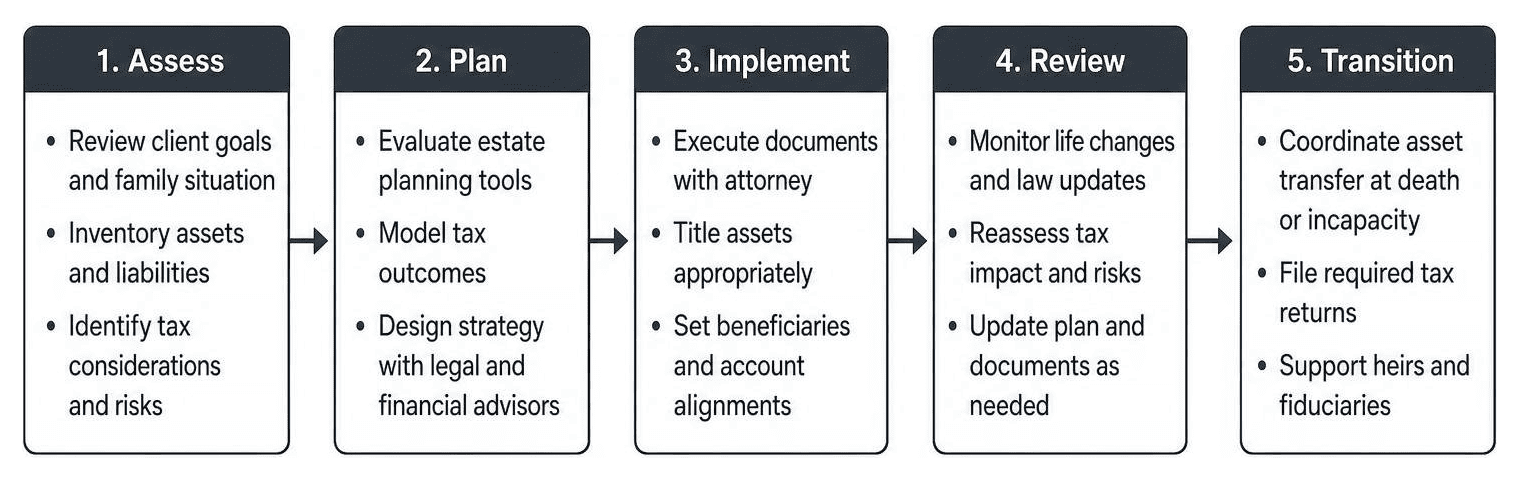
Navigating Wills, Trusts, and Tax Liability
Understanding how different instruments function helps enrolled agents calculate potential estate tax exposure, analyze income tax shifts, and advise clients on post-transfer tax consequences.
For an introductory overview of basic legal structures, practitioners can review Planning for the Future: A Beginner’s Guide to Wills and Trusts.
- Wills: A will directs the disposition of probate assets and can nominate a guardian for minor children, subject to the applicable court process. A will does not itself avoid probate. 4 Basic Types of Wills: What You Need to Know helps EAs understand how testamentary provisions interact with named beneficiaries and asset ownership structures.
- Revocable Living Trusts: A revocable trust holds title to property during the grantor’s lifetime and specifies how assets are managed and distributed upon incapacity or death. Because the grantor typically retains the power to revoke or amend the trust, a revocable living trust is generally treated as a grantor trust under IRC §§ 671–678 during the grantor’s life. The grantor is treated as owning the trust assets for income-tax purposes, so trust income, deductions, and credits are generally reported by the grantor rather than on a separate nongrantor trust return. The primary benefit of a revocable trust is that funded trust assets bypass the court Probate process.
- Irrevocable Trusts: Irrevocability does not determine a trust’s income-tax classification or automatically remove assets from the grantor’s taxable estate. A trust may be wholly or partly a grantor trust; a nongrantor trust’s simple or complex status depends on the applicable rules for the tax year. Counsel and the tax advisor should review retained powers, funding, reporting, administration, and potential estate inclusion under rules such as IRC §§2036–2042. An EIN and Form 1041 may be required depending on the classification and filing rules.
Key Tax Rules, Form 1041, and the Federal Basic Exclusion Amount
Estate transfer tax and estate or trust income tax address different events. Start by identifying the taxpayer, the type of income or transfer, and the applicable filing requirements. A domestic decedent’s estate generally files Form 1041 if it has $600 or more of gross income or a nonresident alien beneficiary. Domestic trusts have different filing tests, including any taxable income, and grantor trusts have special reporting rules. The following distinctions are a starting point; review the governing documents and current IRS instructions before modeling a strategy.
- Form 1041 (U.S. Income Tax Return for Estates and Trusts): This return addresses estate and trust income tax, which is distinct from the estate transfer tax reported on Form 706. Distributable net income (DNI) helps determine the income carried out to beneficiaries and the distribution deduction. Review fiduciary accounting income, applicable filing requirements, and Schedule K-1 reporting. Nongrantor trusts and estates reach higher income-tax rates at much lower taxable-income levels than individuals.
- Form 706 (U.S. Estate and Generation-Skipping Transfer Tax Return): For a U.S. citizen or resident decedent, Form 706 filing generally depends on whether the gross estate, plus adjusted taxable gifts and any applicable specific exemption, exceeds the filing threshold for the year of death. For 2026 decedents, federal law sets the basic exclusion amount at $15 million, with inflation adjustments after 2026. A Form 706 may also be filed to elect portability for a surviving spouse even when no estate tax is due.
- Federal Estate and Gift Tax Basic Exclusion Amount: Public Law 119-21 replaced the anticipated post-2025 reduction. The federal estate and gift tax basic exclusion amount is $15 million per individual for 2026, with inflation adjustments after 2026. Review prior taxable gifts, any available deceased spousal unused exclusion, ownership, valuation, and liquidity rather than assuming the headline amount determines the result. Use the law and amount applicable to the transfer or year of death.
- Section 199A QBI Deduction: Eligible taxpayers, including certain trusts and estates, may claim a deduction of up to 20% of qualified business income, subject to the applicable limitations. For nongrantor trusts and estates, determine which Section 199A items remain with the entity and which are allocated to beneficiaries. QBI, W-2 wages, UBIA, and related information may need to be reported to beneficiaries on Schedule K-1 so each taxpayer computes the deduction using the items properly allocated to that taxpayer. Report beneficiary information with Schedule K-1; grantor-trust items generally belong to the tax owner.
Differentiating Enrolled Agents, CPAs, and Tax Attorneys
Client expectations and professional boundaries require a clear understanding of the credentials, scope of authority, and limitations governing different tax professionals.
| Professional Credential | Primary Licensing Authority | Practice Before the IRS | Typical Areas of Work | Scope and Limitations |
|---|---|---|---|---|
| Enrolled Agent (EA) | Federal (U.S. Department of the Treasury) | Unlimited IRS representation rights, subject to applicable rules | Federal tax specialization, return preparation, audit representation, tax planning | EA credential alone does not authorize state-law legal advice or estate-document drafting |
| Certified Public Accountant (CPA) | State Board of Accountancy | Unlimited IRS representation rights for eligible CPAs | Auditing, financial statement preparation, multi-state business tax compliance | CPA credential alone does not authorize estate-document drafting; state licensing rules also apply |
| Tax Attorney | State Supreme Court / Bar Association | Unlimited IRS representation rights for eligible attorneys | Legal drafting, estate structuring, and tax disputes within authorized practice; privilege depends on the circumstances | State-law services require appropriate authorization; Tax Court practice requires separate admission |
Our guide What Is a Tax Lawyer? explains how legal counsel can support the advisory team.
Education and Certification in Estate Planning for Enrolled Agents
Enrolled agents generally need 72 hours of continuing education during each three-year enrollment cycle, including at least 16 hours each year, of which two must cover ethics. Special rules apply to initial enrollment and other circumstances. Use an IRS-approved provider and confirm that a particular course qualifies for the required category of credit.
Federal tax courses on estate and gift taxation, fiduciary income tax, and retirement distributions can support an EA’s work with estate-planning clients. Course titles alone do not establish eligibility for IRS credit. Confirm the provider, program approval, and credit category before enrolling, and keep the required completion records.
Recent federal changes expanded certain Section 529 qualified-expense categories, including some credentialing-related education costs. Before using 529 funds for EA preparation, testing, or continuing education, confirm that the specific program, credential, provider, and expense satisfy the current statutory definitions and check state tax treatment.
Legal Limits and Avoiding the Unauthorized Practice of Law
An EA credential authorizes practice before the IRS within federal rules; it does not itself authorize state-law estate planning or document drafting. Colorado regulates who may practice law. If an EA is also an attorney, any legal services depend on that separate authority and the applicable professional rules. Keep the tax engagement and legal responsibilities clear.
Reviewing Estate Planning Mistakes to Avoid: A Lawyer’s Perspective highlights why precision in document drafting and legal structuring is essential.
Written engagement terms should explain what the EA will analyze and which matters require an attorney. For a business owner, that may mean the EA models tax consequences while counsel reviews ownership documents, trust provisions, and succession arrangements. With appropriate client authorization, coordinate with the client’s CPA and financial advisor so proposed transfers fit the client’s cash flow, liquidity needs, family circumstances, and long-term goals.
Building an Estate Planning Advisory Model and Firm Requirements

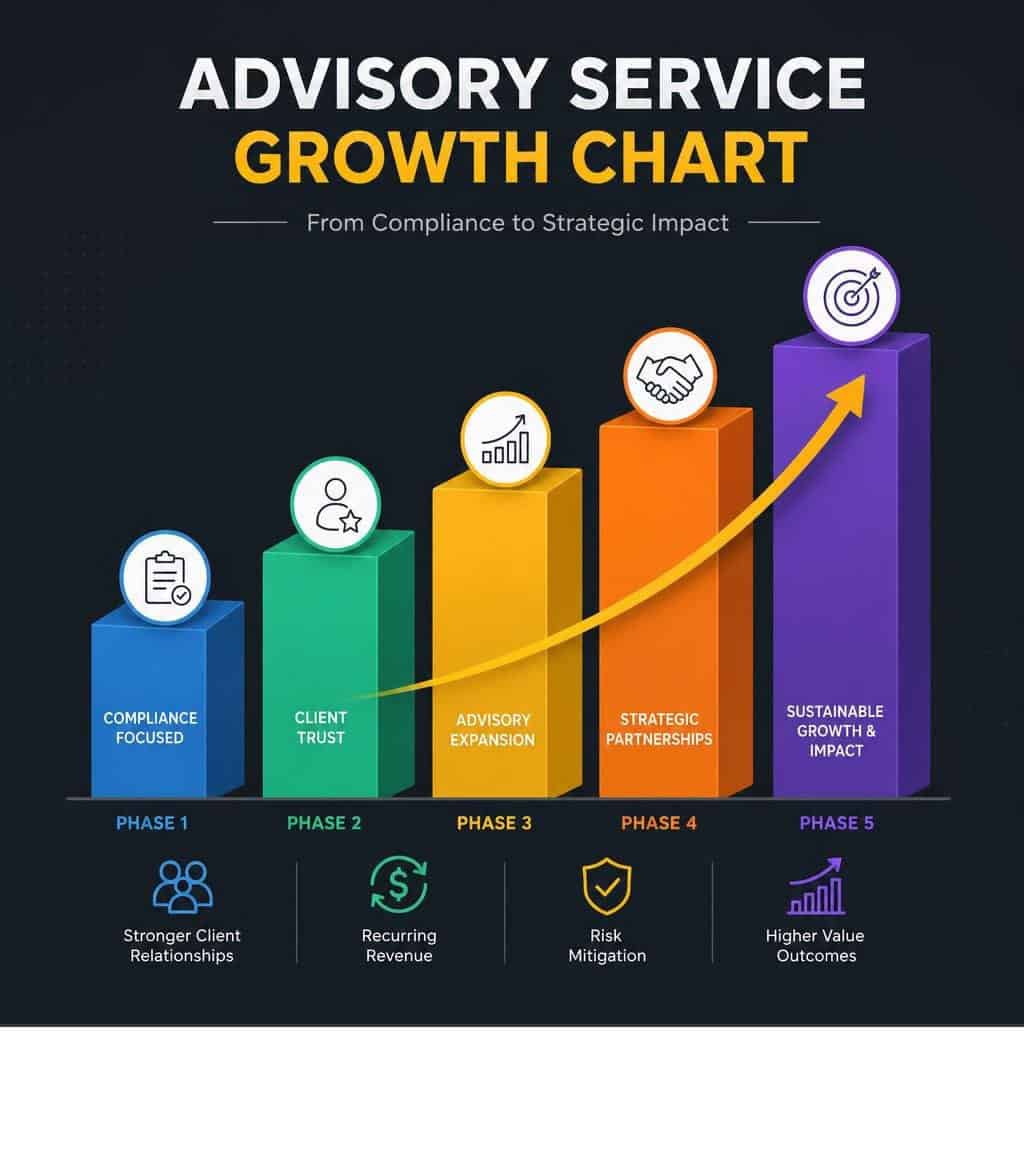
Year-round advisory work can give clients a regular opportunity to review changes in their business, family, and assets. Whether it is suitable for an EA’s practice depends on expertise, staffing, scope, and client demand. Start with services the firm can deliver consistently and a clear process for bringing legal and financial advisors into the discussion. The growth chart below is a conceptual illustration, not measured performance or a projection of revenue or client outcomes.
Operational Compliance and Required Credentials
Separate legal obligations from administrative tools and practice-management choices. An EA’s enrollment, the services offered, and the firm’s filing activity determine which requirements apply:
- Active Preparer Tax Identification Number (PTIN): The EA must maintain an active PTIN with the IRS, renewed annually.
- Centralized Authorization File (CAF) Number: The IRS uses a Centralized Authorization File number to identify representatives and information recipients. An individual may obtain one through Tax Pro Account or receive one when a first Form 2848 or 8821 is processed. A CAF number does not itself authorize access to a client’s information or establish professional credentials. Obtain an appropriate authorization for the specific taxpayer and tax matters.
- IRS Tax Pro Account Access: Tax Pro Account is an optional tool for supported authorizations and account functions. Its online authorization-request service covers specified individual tax matters; do not assume it supports an estate’s or trust’s Form 1041 authorization. Check the IRS service’s current capabilities and use the appropriate Form 2848 or 8821 submission method when needed.
- Electronic Filing Identification Number (EFIN): A preparer or firm that reasonably expects to file 11 or more covered individual, estate, or trust income-tax returns in a calendar year generally must e-file covered returns it files, subject to exceptions and waivers. Count Forms 1040 and 1041 together. An EFIN identifies an authorized e-file provider and is generally issued at the firm level; each employee does not need a separate EFIN.
- Written Information Security Plan (WISP): Tax preparation firms must maintain an appropriate written information security plan under applicable federal safeguards requirements. Tailor it to the practice’s size, systems, and information risks, and review it regularly. Form W-12 asks preparers to acknowledge awareness of this duty; it does not certify that the IRS has reviewed or approved the firm’s plan.
Integrating Estate Planning for Enrolled Agents into Year-Round Advisory
A useful advisory process turns questions into an agreed plan: identify the issue, assign responsibility, document assumptions, and set a follow-up date. Keep the client’s existing advisors involved where authorized, and check whether the legal documents and account records reflect the intended tax treatment.
- Tax Return Delivery Review Meetings: A return review can reveal questions about business interests, beneficiary designations, existing trusts, and expected transfers. With the client’s authorization, collect the relevant information and agree on which advisor will address each issue. A short written action list can help the client understand what remains to be done.
- Opportunity Identification: Review potential Form 709 filing obligations and basis adjustments under IRC §1014. Eligible inherited property can receive a basis adjustment upward or downward; exceptions apply, including income in respect of a decedent. If considering a Roth conversion, compare its current income-tax cost, available cash, and beneficiary distribution rules with the client’s goals. A conversion does not change statutory tax brackets or guarantee a lower overall tax cost.
- Advisory Pricing Models: Hourly billing, fixed project fees, and retainers can each fit a practice. Choose a model that reflects the scope, uncertainty, staffing, and client’s needs. Define included work, exclusions, billing, and coordination responsibilities in writing. Do not promise tax savings or make fees contingent on results without checking the applicable professional rules.
- Avoiding Common Pitfalls: Confirm competence for the engagement, distinguish tax analysis from legal implementation, and maintain appropriate client authorizations. Review existing professional liability and cyber coverage with an insurance advisor to identify exclusions or gaps; a separate policy is not automatically required merely because the firm adds advisory work.
Frequently Asked Questions About Estate Planning for EAs
Can Enrolled Agents Draft Wills or Trust Documents for Clients?
An EA credential alone does not authorize an individual to draft wills or trusts for clients. An EA who is separately licensed and authorized to practice law may provide legal services under that authority. Otherwise, refer legal drafting and state-law advice to an appropriately authorized attorney.
A tax projection does not establish that a trust or transfer will achieve the intended legal result. The EA can explain tax assumptions and reporting consequences; counsel should address document terms and legal implementation. Coordinate the work before the client signs documents or changes ownership.
How Should Enrolled Agents Price Estate Planning Advisory Services?
There is no single appropriate pricing model. Hourly fees, fixed fees, and retainers can each be suitable when the scope and billing terms are clear. For example:
- Fixed Project Fees: A defined fee can cover a trust tax review, current-law estate-tax modeling, or analysis of basis consequences. Identify assumptions, deliverables, and the treatment of additional work before starting.
- Tiered Retainer Packages: A recurring fee can cover agreed periodic reviews, return preparation, or advisor coordination. Specify which clients and returns are included, how unusual projects are billed, and when the engagement will be reviewed.
Explain the work covered by the fee, who will perform it, and how changes in scope will be handled. Pricing should reflect the engagement’s complexity and responsibilities, without implying that a particular tax saving or financial result is assured.
What Compliance Documents Does an EA Firm Need Before Offering Advisory?
Confirm the requirements for the actual services being provided, then document the firm’s operating arrangements. In particular:
- Keep EA enrollment and the annual PTIN current, and satisfy applicable continuing-education requirements.
- Obtain the taxpayer authorizations needed for representation or information access; a CAF number alone is not authorization.
- Use an authorized e-file arrangement where required. Tax Pro Account is an optional tool with limited supported functions.
- Maintain and implement the written information security plan and safeguards required for the practice.
- Review professional liability and cyber coverage for the services offered; insurance choices are distinct from IRS credentials.
- Use written engagement terms to define scope, responsibilities, fees, and coordination with legal counsel. Confirm any additional requirements applicable to the practice.
Conclusion
Estate planning for enrolled agents can help clients connect tax decisions with their estate and business plans. The EA’s contribution is strongest when the tax analysis is grounded in the client’s records and coordinated with the professionals responsible for legal implementation and financial advice.
Coordination helps identify gaps between tax assumptions, legal documents, and account records. Results depend on the client’s circumstances, the governing rules, and follow-through. Periodic review is particularly useful after a business transaction, major gift, family change, or change in law.
We work alongside enrolled agents, CPAs, and financial advisors on the legal aspects of a client’s estate and business planning. A shared understanding of responsibilities helps each advisor contribute while keeping the client informed.
Explore our Services or schedule a consultation to review how your client’s estate documents, ownership arrangements, and tax planning can work together. We welcome coordination with existing advisors serving clients in Centennial and the greater Denver area.
Sources and scope: Reviewed September 21, 2026. See the IRS Form 706 instructions, Form 1041 instructions, EA renewal and education guidance, Tax Pro Account guidance, preparer e-file requirements, Form W-12, and Publication 970. For professional boundaries, see Colorado’s unauthorized-practice guidance and U.S. Tax Court admission requirements.
This article provides general educational information, not individualized legal or tax advice. Planning and filing decisions depend on the facts and applicable law; consult appropriately qualified advisors about your circumstances.